A capital that behaves like a village with a fjord attached: four days of water, forest, good coffee and very little driving.
The idea
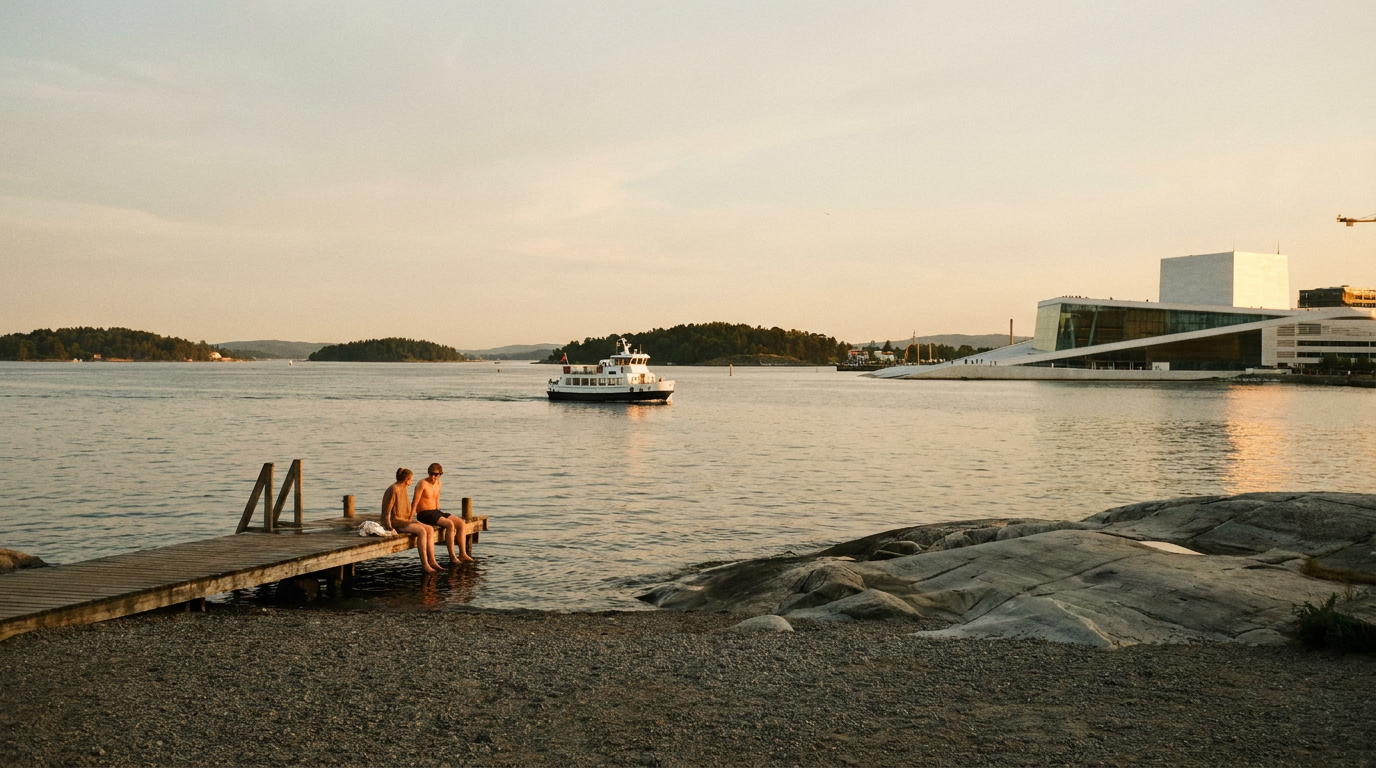
Oslo is the rare capital where the best things are free and outdoors. The city sits at the head of a fjord, with forest starting where the last tram stops. You can swim before breakfast, walk on the roof of the opera house, take a public ferry to an island for lunch and be in a pine wood by four. None of it requires speed, which is why we like it. This is a city guide for people who travel at van pace — whether you arrive in one or not.
Getting there, honestly
Our vans live in Lithuania and Portugal, and Oslo is a long way from both. From Klaipėda the realistic route is the overnight ferry to Karlshamn in Sweden, then roughly 500 km north-west on good, quiet roads — a comfortable two-day drive at Bee speed. Taking a Birbi van outside its home country is not something you can click on the booking form; write to us first and we will tell you plainly whether it makes sense for your dates. If you fly in instead, everything below still works on foot, by tram and by ferry.
Day 1 — Arrive, go to the water
Do not start with a museum. Walk down to the harbour promenade and keep going east past the opera house until you reach the bathing spots at Sørenga, where locals swim in the fjord in their lunch break. Get in. The water is colder than Portugal and warmer than you fear. Dry off on the warm stone, then climb the sloping marble roof of the opera house — it is public, free and the best place in the city to understand where you are. Dinner is a bakery picnic on the roof, or something small and good in Grünerløkka if you want a street with life in it.
Day 2 — Bygdøy and the fjord
Take the little ferry from the city hall pier (summer only; bus 30 the rest of the year) across to the Bygdøy peninsula. It is ten minutes of water and feels like leaving town. The Fram Museum has the actual wooden polar ship you can walk around inside; the Kon-Tiki Museum next door has a raft that crossed the Pacific. Pick one, not both — this is a slow trip. The Viking ships are away while their museum is rebuilt, so do not drive across town looking for them. Afternoon: the beaches at Huk, a stretch of rock and grass where nobody is in a hurry. Walk back along the shore if your legs agree.
Day 3 — Up into the forest
Metro line 1 climbs out of the city like a funicular, past the Holmenkollen ski jump, to Frognerseteren at the top. From there, Nordmarka begins: a forest the size of a small country, with marked trails, lakes you can swim in and a wooden café or two. Walk down to Sognsvann lake — two hours, gently, with a swim halfway — and take the metro home from the other side. If you came with a van, Bogstad lake and the campsite on its shore are the natural base for this day. No tolls, no traffic, no decisions.
Day 4 — Islands, or Drøbak
Two good options, choose by weather. The city islands — Hovedøya, Gressholmen, Langøyene — are reached by ordinary public ferries from the harbour and covered by a normal transport ticket. Hovedøya has monastery ruins, meadows and a swimming cove; bring food, there is almost nothing to buy. Or take the van (or a bus) 40 km south along the fjord to Drøbak, a white wooden town with a small island fortress offshore and ice cream that justifies the drive. Either way, be back for the long light — in June it does not properly get dark.
Where to sleep
Norway’s famous right to roam covers tents on open land, not vehicles, and Oslo is a city — do not try to sleep in the van on a residential street. Two campsites make the trip easy. Ekeberg, on the hill above the harbour, has the view of the city and is open in the summer months only. Bogstad, beside the lake on the edge of the forest, is open all year, has proper facilities and is twenty minutes from the centre by bus. Book ahead in July. Outside Oslo, the usual rule applies: marked motorhome areas and campsites, and ask locally.
Money, tolls and other honest notes
Norway is expensive and does not pretend otherwise. Eat from supermarkets and bakeries, drink tap water (it is excellent), and treat restaurants as an event, not a routine. Alcohol is heavily taxed; bring what you need from the ferry. Oslo’s toll ring is fully automatic — cameras read your plate and foreign vehicles are invoiced afterwards, so there is nothing to stop for but a bill will follow you home, and older diesels pay a little more. Speed limits are low and the fines are serious; at Bee speed this is not a problem, it is a lifestyle. Cards work everywhere, including the ferries. Nobody will expect you to speak Norwegian, and everybody will be slightly pleased if you try.
What to bring
A swimsuit you can put on quickly. A towel that dries fast. One warm layer more than you think, even in July — the fjord makes its own weather. Good walking shoes for the forest and a tote bag for the bakery. Leave the itinerary loose. The point of Oslo is that it rewards people who stop.
Last checked: 3 Oct 2026